
The Paper Prescription Problem: How Far Behind Is Healthcare? with Dr. Tina Manoharan ex-Phillips
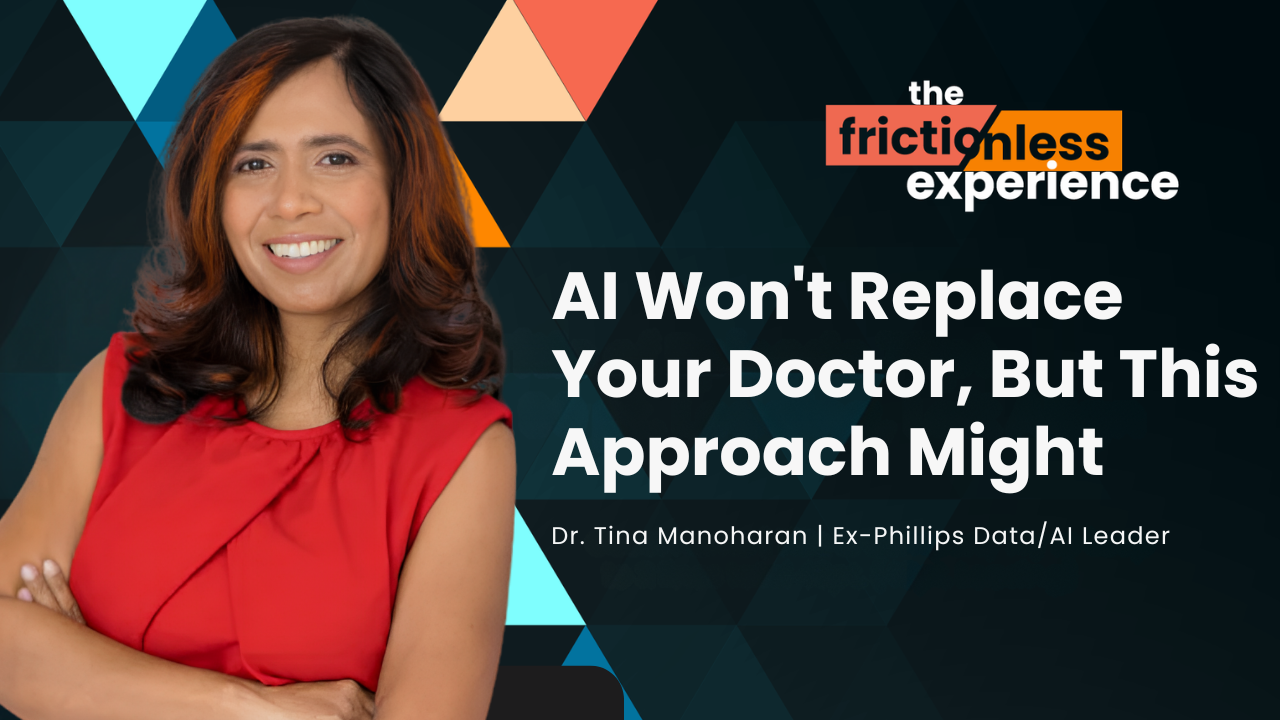
Your bank details are at your fingertips on your phone. Your healthcare records? Still scattered across paper files and incompatible systems. Dr. Tina Manoharan spent 16 years at Siemens Healthcare, then led data and AI innovation at Philips, and she's seen firsthand what happens when you deploy AI in an industry where getting it wrong isn't just expensive, it's life or death. We're replaying one of our most fascinating episodes because Tina's framework for AI implementation matters more now than ever.
Join hosts Chuck Moxley and Nick Paladino as we revisit Tina's infectious enthusiasm for healthcare innovation. She got genuinely excited when her German doctor put her prescription on a card instead of printing it on paper. The nurse couldn't figure out why someone leading AI innovation for a global company was thrilled about digital prescriptions. That's how far healthcare still lags behind banking.
Tina breaks down where AI adds value: oncologists making treatment decisions with no idea what happened to similar patients. Individual doctors see limited cases, but AI learns from thousands across institutions. She flips the script on implementation. Don't start with data, start with the problem. Her Uber example shows you don't automate calling cabs, you transform the workflow.
We explore global challenges: US-trained models fail in Asia because organ sizes differ. She discusses navigating FDA, EU AI Act, and NMPA regulations. She emphasizes co-creation: you need clinicians, nurses, and patients, not just data scientists. And she addresses the fear every professional has, “will AI replace my job?” Even doctors asked. Her answer, leaders being innovative won't be replaced, they'll just perform better.
Key Actionable Takeaways:
- Start with the problem, not the data - Never begin with "what data do we have, let's build AI for that"; instead, understand the customer need, map the value flow and data flow, then determine the right AI solution working backwards from the actual problem
- Integrate AI into existing workflows, don't force new ones - AI solutions must fit seamlessly into current clinical workflows rather than requiring separate devices or processes; however, be prepared for AI to fundamentally transform workflows like Uber changed transportation, not just automate existing manual tasks
- Co-create with all stakeholders across disciplines - Include clinicians making decisions, nurses preparing information, patients receiving care, medical officers, sales leaders bringing multi-hospital insights, and clinical partners; AI development requires perspectives from everyone in the value chain to avoid building solutions that don't address real needs
Want more tips and strategies about creating frictionless digital experiences?
Subscribe to our newsletter! https://www.thefrictionlessexperience.com/frictionless/
Download the Black Friday/Cyber Monday eBook: http://bluetriangle.com/ebook
Dr. Tina Manoharan's LinkedIn: https://www.linkedin.com/in/dr-tina-manoharan/
Nick Paladino's LinkedIn: https://linkedin.com/in/npaladino
Chuck Moxley's LinkedIn: https://linkedin.com/in/chuck-moxley