
AI in Fixing Friction: The Gap Between Finding and Fixing
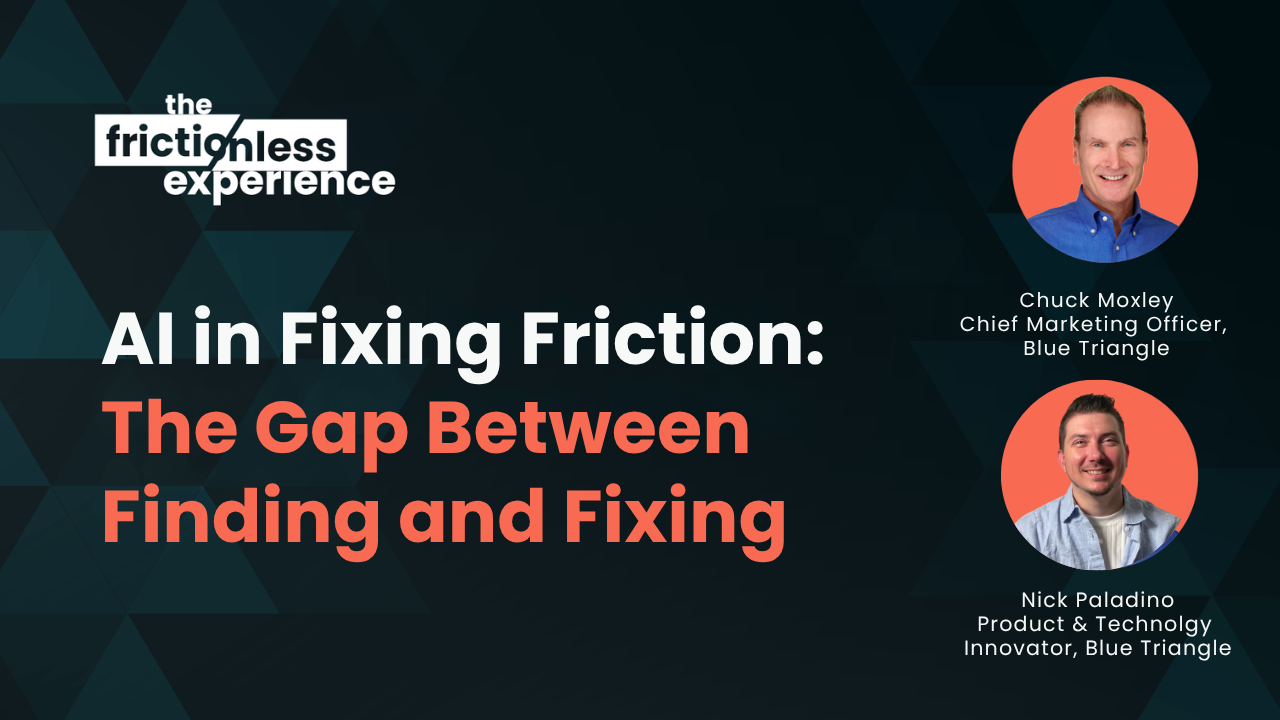
Your company has identified more than 2 thousand friction points in your digital experiences, but you're only ever going to fix a tiny fraction of them. How do you decide which problems matter most? The gap between knowing and fixing is exactly where the revenue leaks out.
Join hosts Chuck Moxley and Nick Paladino as we explore Nick's recent blog post on using AI to bridge that gap, not by automating the fix, but by accelerating the decision about what to fix. We dig into the huge difference between AI determining which action to take versus AI actually taking them. When AI suggests a fix, a skilled developer can apply their 10% of proprietary knowledge and ship it in 30 minutes instead of six hours. But when AI actually takes the action, it can destroy things that exist for a reason, like legal requirements that feel like friction but actually protect you.
We also talk about how the role of both developers and product managers is changing. Suddenly, 90% of your job is reviewing someone else's AI output for legitimacy. You're spending less time diagnosing or building and more time debugging what the AI thought was correct. Is that where the value lives now?
Key Actionable Takeaways:
- Use AI to identify which problems matter most, not to solve them automatically - let developers apply their expertise to the last 10% of work
- Understand why friction exists before you remove it - intentional friction sometimes protects you from bigger problems
- Plan for AI to be wrong sometimes - a 5% failure rate for humans means AI can too, so build review processes accordingly
Want more tips and strategies about creating frictionless digital experiences?
Subscribe to our newsletter! https://www.thefrictionlessexperience.com/frictionless/
Download the Five Step Site Speed Target Playbook: http://bluetriangle.com/playbook
Nick Paladino's LinkedIn: https://linkedin.com/in/npaladino
Chuck Moxley's LinkedIn: https://linkedin.com/in/chuck-moxley